

The Simple Power of an Audit Checklist
Introduction:
As a Lean Six Sigma Master Black Belt, I understand the importance of an audit checklist in ensuring thoroughness, accuracy, and consistency.
An audit checklist is a powerful tool that guides auditors through the assessment process, ensuring no stone is left unturned. In this article, I will examine the core of an audit checklist and highlight its indispensable role in conducting effective audits.
Understanding the Audit Checklist:
An audit checklist is the cornerstone of a successful audit. It serves as my trusted companion, whether I'm writing one for others to use or using one myself. The Audit checklist helps in outlining the specific tasks, questions, and criteria that require careful consideration during an audit. By adhering to this meticulously crafted roadmap, auditors can maintain focus, organization, and precision throughout the audit process.
The checklist encompasses a broad range of elements, including compliance requirements, regulatory guidelines, industry standards, best practices, and internal policies.
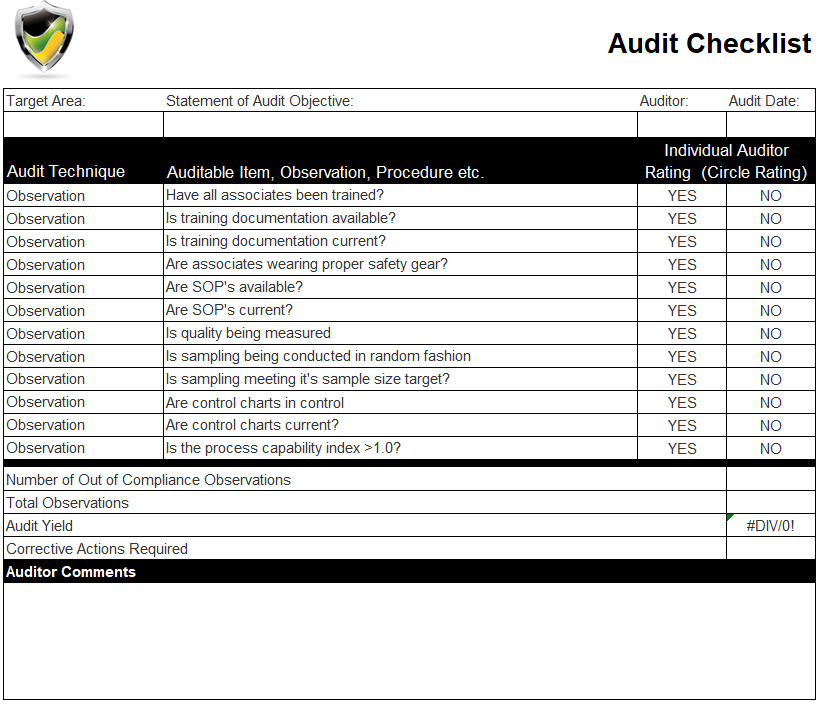
The Power of an Audit Checklist
- Unparalleled Thoroughness: With the aid of an audit checklist, my assessments leave no room for oversight. Critical aspects are examined meticulously, minimizing the risk of incomplete or inaccurate evaluations.
- Consistency at Its Core: Consistency is the hallmark of a proficient auditor. By adhering to a standardized audit checklist, I can ensure that the same level of scrutiny and evaluation is applied consistently across different audits, yielding reliable and equitable results.
- Streamlined Efficiency: Efficiency is key in the world of audits. The audit checklist streamlines and auditors workflow, eliminating redundancy and guiding them toward the most critical areas of focus. This strategic approach saves time and resources while optimizing the audit process.
- Effective Communication Catalyst: The audit checklist serves as a beacon of clarity, facilitating open and effective communication between auditors and the auditees. It acts as a common language, enabling me to articulate the purpose and scope of the audit, fostering meaningful discussions, and providing clarity when addressing queries.
- Documentation Empowered: Documenting audit findings and observations is paramount. The audit checklist serves as a comprehensive record of the audit journey, enabling auditors to capture essential details and prepare accurate, detailed, and impactful audit reports.
Conclusion:
As a seasoned Master Black Belt, I vouch for the power of an audit checklist in ensuring effective audits. By embracing this tool, auditors can achieve unrivaled thoroughness, maintain consistency, streamline efficiency, promote effective communication, and deliver comprehensive audit documentation. The audit checklist empowers us to drive meaningful improvements, mitigate risks, and navigate the ever-evolving landscape of audits with confidence and precision.
About Lean Sigma Corporation
Lean Sigma Corporation is an independent Six Sigma certification authority responsible for the development, administration, and governance of professional Six Sigma credentials. The organization defines certification frameworks, examination standards, and credentialing systems used to evaluate and recognize Six Sigma competence across professional training environments.
Organizations and instructors delivering Six Sigma training under recognized standards participate in the Authorized Training Partner (ATP) Program.