

Process Capability in Six Sigma
Process capability is a core analytical concept in Six Sigma used to evaluate how well a process performs relative to defined specifications. Capability analysis helps determine whether a process is stable, predictable, and capable of consistently meeting customer or business requirements.
In professional Six Sigma practice, process capability is not treated as a standalone calculation. It is taught, applied, and interpreted within structured training, project analysis, and certification environments to support data-driven decision-making.
Understanding Process Capability and Performance Indexes
Process capability quantifies the relationship between process variation and specification limits. It provides a statistical view of whether a process can meet requirements over time and of the inherent variation within the system.
Capability and performance indexes commonly used in Six Sigma:
- Cp – Potential capability based on short-term variation
- Cpk – Capability adjusted for process centering
- Pp – Overall process performance based on long-term data
- Ppk – Performance adjusted for centering and long-term variation
- Cpm – Capability adjusted for deviation from a target value
Each index answers a different question about process behavior. Interpreting them correctly requires an understanding of data quality, process stability, and the context in which the analysis is performed.
In Six Sigma training, these measures are typically introduced after foundational statistical concepts and are applied during the Measure and Analyze phases of DMAIC projects to evaluate baseline performance and improvement impact.
How Process Capability Is Learned and Applied
Process capability analysis is most effective when learned within a structured Six Sigma framework. Rather than memorizing formulas, practitioners learn how to:
- Assess whether a process is stable before calculating capability
- Select the appropriate index based on data type and objective
- Interpret results in the context of customer requirements
- Avoid common misuses of capability metrics
- Use capability results to guide improvement decisions
Because capability metrics can be misleading when applied incorrectly, professional Six Sigma programs emphasize interpretation, limitations, and proper use alongside calculation methods.
How to Learn More, Get Access, or Teach Capability Analysis
Lean Sigma Corporation offers multiple pathways to learn and apply process capability concepts, based on your role and objectives.
-
Structured learning programs aligned with official certification exams
-
Professionally governed exams that assess understanding of process capability, performance metrics, and their proper use within Six Sigma analysis.
-
For instructors and organizations delivering Six Sigma training using Lean Sigma Corporation materials, systems, and certification framework.
- Articles on How to Perform Capability Analysis using Statistical Software:
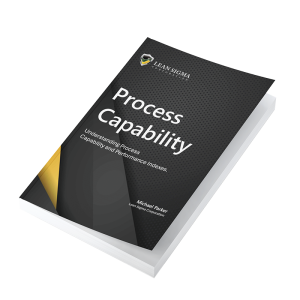
- Process Capability eBook
38 pages of Capability performance indexes: Cp, Pp, Cpk, Ppk, and Cpm. Learn how they are calculated and what the results mean, with a 10-question quiz.
- Available for all registered learners -
About Lean Sigma Corporation
Lean Sigma Corporation is an independent Six Sigma certification authority responsible for the development, administration, and governance of professional Six Sigma credentials. The organization defines certification frameworks, examination standards, and credentialing systems to evaluate and recognize Six Sigma competence across professional training environments.
Organizations and instructors delivering Six Sigma training in accordance with these recognized standards participate in Lean Sigma Corporation's Authorized Training Partner (ATP) Program.