

Six Sigma DMAIC Roadmap
The Structure of Professional Six Sigma Improvement Practice
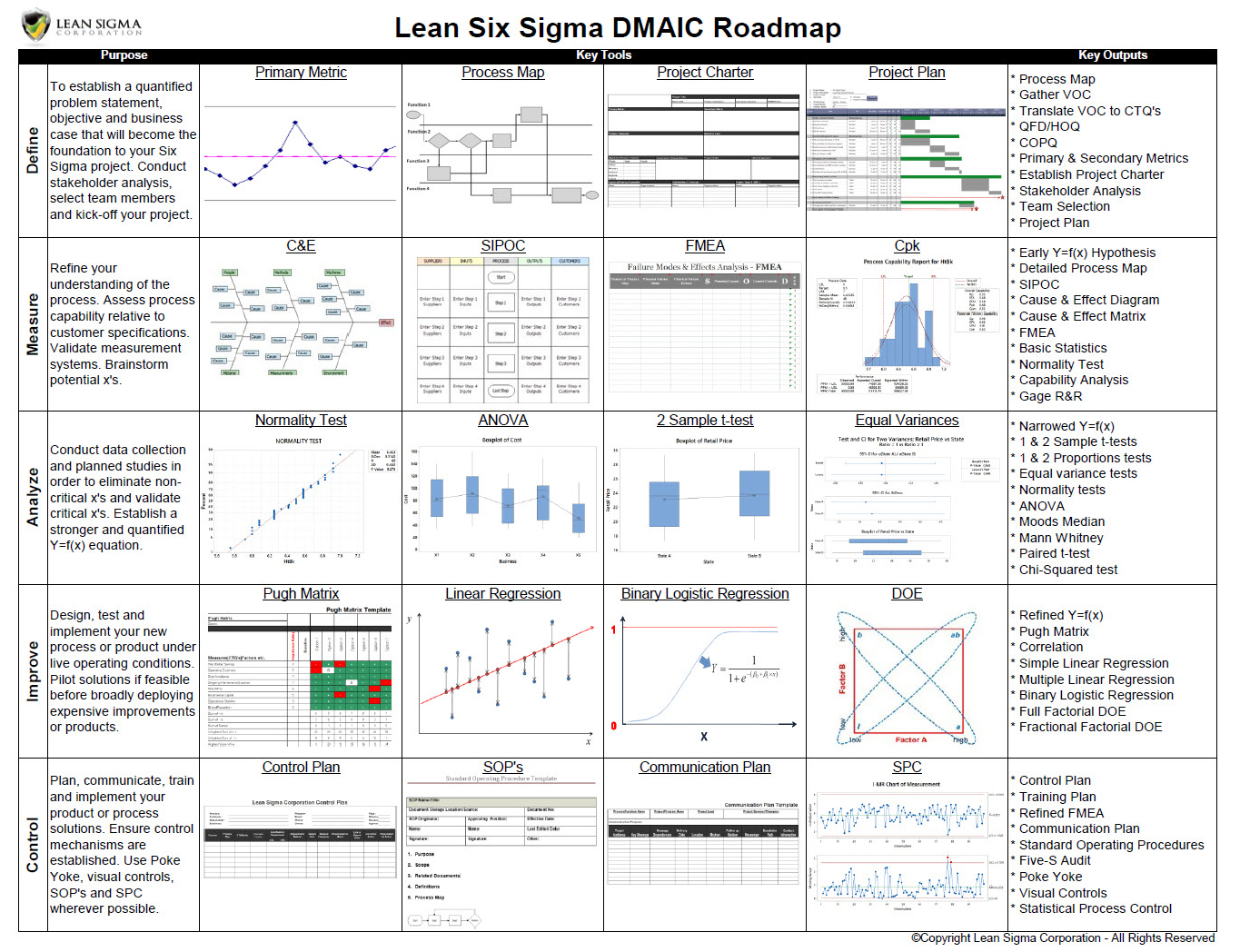
The DMAIC roadmap defines the structured, phase-based methodology used in professional Six Sigma practice to improve process performance through data-driven analysis and control. DMAIC—Define, Measure, Analyze, Improve, and Control—provides the foundational framework for executing Six Sigma projects consistently and effectively.
The roadmap outlined on this page reflects how DMAIC is taught, applied, and evaluated within structured Six Sigma training and certification environments. It is not a standalone product or shortcut, but a representation of the disciplined approach used to govern improvement work across organizations and industries.
What the DMAIC Roadmap Represents
DMAIC in Professional Six Sigma Practice
In professional Six Sigma environments, DMAIC projects are executed within structured governance models. Project progress is reviewed through defined tollgates, and results are evaluated against established criteria for technical rigor, data integrity, and business impact.
DMAIC roadmaps are commonly used within:
- Instructor-led Six Sigma training programs
- Internal corporate improvement initiatives
- Certification-aligned project execution
- Formal project reviews and validations
The roadmap provides consistency, while tools and techniques vary by project complexity and certification level.
Access to DMAIC Tools and Roadmaps
DMAIC tools, templates, and instructional materials are not distributed as standalone assets. Access to Lean Sigma Corporation training materials, roadmaps, and learner resources is provided through structured certification programs and authorized delivery models.
Organizations and instructors delivering Six Sigma training under recognized standards participate in approved programs that govern how DMAIC methods are taught, applied, and assessed.
Where to Go Next
Depending on how Six Sigma is being applied, Lean Sigma Corporation provides multiple pathways:
- Certification Courses
Structured learning programs aligned with official Six Sigma certification exams. - Certification Exams
Credentialing exams are administered directly by the certification authority. - Authorized Training Partner (ATP) Program
For organizations and instructors delivering Six Sigma training within governed frameworks.
About Lean Sigma Corporation
Lean Sigma Corporation is an independent Six Sigma certification authority responsible for the development, administration, and governance of professional Six Sigma credentials. The organization defines certification frameworks, examination standards, and credentialing systems to evaluate and recognize Six Sigma competence across professional training environments.
Organizations and instructors delivering Six Sigma training in accordance with these recognized standards participate in Lean Sigma Corporation's Authorized Training Partner (ATP) Program.